Why Slow Playing a Monster in Poker Does Not Always Maximise Profit

Slow playing a strong hand is often presented as a clever way to extract extra value from opponents. In reality, this approach carries significant risks that many players underestimate. While trapping can work in specific situations, relying on it too frequently leads to missed value, lost pots, and unnecessary complexity. Understanding when slow play becomes a mistake is essential for consistent long-term results at the tables.
The Hidden Risks Behind Slow Playing Strong Hands
At first glance, slow playing seems logical: disguise the strength of your hand and allow opponents to continue betting. However, this strategy assumes that your opponent is willing to put chips into the pot. In many modern games, especially online, players tend to fold more often when they sense uncertainty. By checking or underbetting, you may unintentionally signal weakness, but you also give opponents a chance to check back and see free cards.
Another major issue lies in board development. Poker is a dynamic game, and each new card can drastically change hand strength. A monster hand on the flop can quickly become vulnerable on the turn or river. By not building the pot early, you reduce your ability to charge opponents for drawing hands and increase the likelihood of being outdrawn.
There is also a mathematical component. Value betting consistently generates expected profit over time, whereas slow playing depends heavily on opponent behaviour. If opponents fail to cooperate by betting into you, your expected value drops significantly compared to straightforward betting lines.
When Opponents Refuse to Take the Bait
One of the most common outcomes of slow playing is simple: your opponent checks behind. This is particularly frequent in low- and mid-stakes games, where players avoid bluffing in uncertain spots. As a result, you miss at least one betting street, which directly reduces your potential winnings.
Against passive opponents, slow playing becomes even less effective. These players rarely bet without a strong hand, so giving them the initiative often leads to smaller pots. Instead of extracting value, you end up allowing them to reach showdown cheaply.
Modern poker theory also encourages balanced play. If you only check strong hands, observant opponents can exploit this pattern by checking back more frequently or folding when you finally show aggression. This reduces the long-term profitability of slow play as a core strategy.
Lost Value and Missed Opportunities
The biggest downside of slow playing is the loss of guaranteed value. When you hold a strong hand, especially in favourable board conditions, betting immediately ensures that weaker hands pay to continue. Delaying aggression often leads to situations where opponents would have called earlier but fold later when the board becomes threatening.
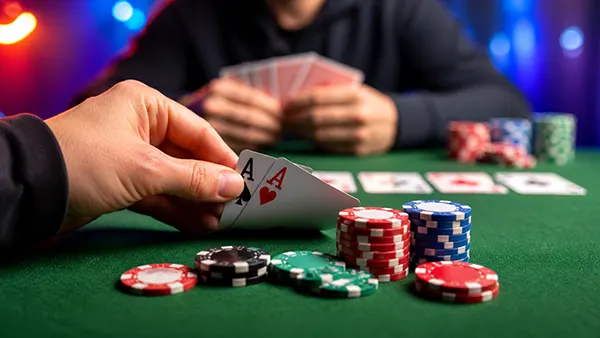
Consider a typical example: you flop a set on a draw-heavy board. By checking, you allow your opponent to see a turn card for free. If the draw completes, they may either outdraw you or shut down entirely, leaving you unable to extract meaningful value.
There is also the issue of stack sizes. In deeper stack situations, building the pot gradually is necessary to maximise profit. Slow playing disrupts this process, making it difficult to reach optimal bet sizes by the river.
The Impact of Board Texture
Board texture plays a critical role in determining whether slow play is appropriate. On dry boards with little connectivity, slow playing can sometimes be justified because there are fewer dangerous turn cards. However, such situations are relatively rare in practice.
On coordinated boards with flush or straight possibilities, slow playing becomes significantly riskier. Each additional card increases the number of possible combinations that can beat your hand. In these cases, aggressive betting protects your equity and forces opponents to pay for their draws.
Professional players often prioritise protection and value extraction over deception. This approach reflects a deeper understanding of probabilities and opponent tendencies, rather than relying on risky traps.
Balancing Strategy and Practical Decision-Making
Effective poker strategy requires balancing theoretical knowledge with practical adjustments. While slow playing has its place, it should be used selectively rather than as a default option. The key is recognising situations where opponents are likely to bluff or overvalue weaker hands.
Game format also matters. In fast-paced online environments, players tend to make quicker decisions and bluff less frequently. This reduces the effectiveness of slow playing compared to live settings, where emotional factors and reads play a larger role.
Player profiling is essential. Against aggressive opponents who frequently continuation bet, slow playing can sometimes induce bluffs. However, against cautious or inexperienced players, straightforward value betting remains the more reliable approach.
When Slow Playing Actually Works
There are still scenarios where slow playing can be effective. For example, when you hold an extremely strong hand on a dry board against an aggressive opponent, checking can encourage them to bluff multiple streets. In such cases, the potential reward justifies the risk.
Another suitable situation involves positional advantage. Acting last allows you to control the size of the pot and respond to your opponent’s actions more effectively. This flexibility makes slow playing slightly safer compared to out-of-position scenarios.
Ultimately, successful players treat slow playing as a situational tool rather than a core strategy. By focusing on value extraction, board awareness, and opponent tendencies, you can avoid the common pitfalls that reduce profitability over time.